

Why the Lindsay Clancy jury needed a long black
The mistrial of Lindsay Clancy
No, this is not a coffee review but by the end of this article, "long black" will mean something very specific about how New South Wales District Courts rescue trials that the American legal system lets collapse.
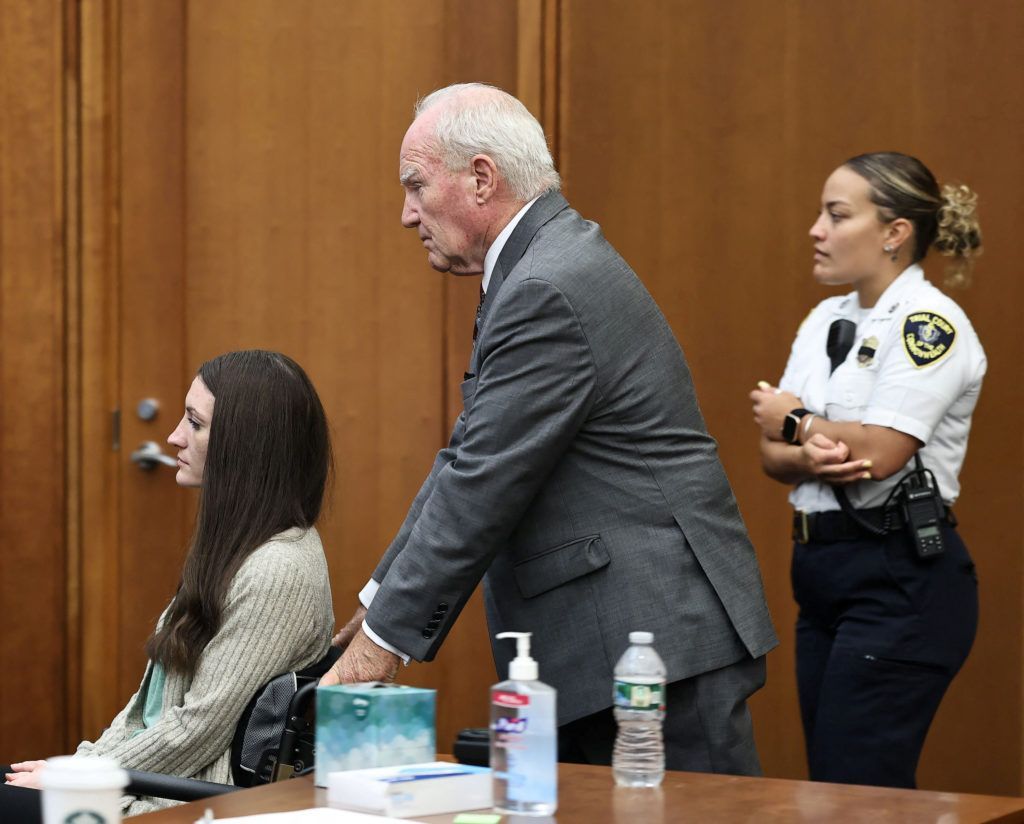
This week, a Massachusetts judge declared a mistrial in one of the most closely watched criminal trials in America. Lindsay Clancy — the mother accused of killing her three children while, her lawyers say, in the grip of postpartum psychosis — will face a retrial after her jury deadlocked.
Reports from the courtroom suggest the split may have come down to a single holdout juror. Twelve people deliberated for the better part of a week; eleven apparently reached a view; one did not; and the entire trial collapsed.
The case is now listed to return to court on 29 September 2026. This is will mean running the trial again in circumstances where nearly every potential new jury member in Massachusetts has heard about or even watched some of the evidence in the trial already.
For Australian lawyers watching from afar, the striking thing is not the deadlock itself — juries disagree everywhere — but how little the court could do about it.
In Massachusetts, as in most US jurisdictions, a criminal verdict must be unanimous, full stop. When a jury genuinely cannot agree, the judge's only real tool is to send them back to try again, and eventually to declare a mistrial.
In New South Wales, we do things differently. Our courts have a graduated set of responses to a struggling jury — and, borrowing from the national beverage, practitioners sometimes describe the first two stages as the short black and the long black.
The short black: "keep going"
When a jury first sends out a note saying they are having trouble agreeing — often only a few hours into deliberations — the judge will usually give a brief, low-key encouragement to persevere. Nothing dramatic: the judge reminds the jury that disagreements at this stage are common, that they have heard a lot of evidence, and that they should continue discussing the issues calmly with open minds.
Like the coffee, it is short, strong and to the point. It resolves a surprising number of "deadlocks", because many early notes reflect frustration rather than a genuine impasse.
If the jury comes back and says they still cannot agree, the judge moves to the full perseverance direction — and here the coffee pun writes itself, because the leading authority really is called Black: Black v The Queen (1993) 179 CLR 44.
In Black, the High Court laid down a model direction that judges must follow carefully. In substance, the jury is told:
- the judge has the power to discharge them without a verdict, but will only do so if satisfied there is no likelihood of genuine agreement after further deliberation;
- experience shows that juries can often agree if given more time to consider the evidence and discuss the issues;
- each juror should listen carefully and objectively to the views of the others, and calmly weigh up whether their own view is soundly based; but
- no juror is required to surrender an honestly held view simply to conform with the majority or to produce a verdict.
That last point is the heart of it. The Black direction encourages agreement — but does not compel it. The High Court was emphatic that a jury must be free to deliberate without pressure, and appellate courts police this strictly. In Timbery v R [2007] NSWCCA 355, a conviction was overturned because the trial judge told the jury it would be "just terrible" if they were discharged after a four-week trial. Emotive arm-twisting of that kind is a miscarriage of justice.
The extra shot: majority verdicts
Since 2006, s 55F of the Jury Act 1977 (NSW) has allowed a court to accept a majority verdict in most State criminal trials — a verdict of 11 of 12 jurors (or 10 of 11, where a juror has been discharged). Before that can happen, three things are required:
- the jury has deliberated for at least eight hours, or a period the court considers reasonable given the nature and complexity of the trial;
- the jury has told the court it cannot reach a unanimous verdict; and
- the court is satisfied, after examining one or more jurors on oath, that a unanimous verdict is not likely to be reached after further deliberation.
Once those preconditions are met, the judge gives a fresh direction telling the jury that a majority verdict may now be accepted.
We can apply that to the Clancy trial scenario.
On the reporting, eleven jurors were of one view and a single juror stood apart.
In a NSW trial of a comparable State offence — and yes, that includes murder — that is precisely the situation s 55F was enacted for.
After eight hours and the required judicial inquiry, an 11–1 verdict could have been taken, and the trial would have ended with a verdict rather than a mistrial, a shattered jury, and everyone bracing to do it all again.
The fine print (because lawyers)
Two further considerations which we cannot ignore in this article. First, majority verdicts are not available for Commonwealth offences. Section 80 of the Constitution requires a unanimous verdict for trials on indictment of federal offences — the High Court said so in Cheatle v The Queen (1993) 177 CLR 541. If Clancy had been facing federal charges here, NSW would have been in the same boat as Massachusetts.
Second, hung juries do still happen in Australia. If a jury splits 9–3, or the disagreement runs deeper than one holdout, no direction can save the trial, and a discharge and retrial follow just as they will in Plymouth County. Our system reduces the odds of a mistrial; it does not abolish them.
But the one-angry-juror problem — a lone holdout defeating eleven — is the specific failure mode our Parliament legislated against twenty years ago. The Clancy family, the jurors, and the Massachusetts justice system are about to relive a harrowing trial largely because their law leaves no room for a short black, a long black, or the extra shot.
What the Clancy jury needed, in other words, was a legal system with on long black and the extra shot of a majority verdict on the menu.
This article is general information about NSW criminal procedure, not legal advice. If you or someone you know is facing criminal charges, contact Velasquez Legal for advice tailored to your situation.