

Why Lindsay Clancy's Lawyer Couldn't Blame the Husband (Even If He Wanted To)
The internet blamed Patrick Clancy. Lindsay Clancy's lawyer couldn't — and never would. A Sydney criminal defence solicitor explains instructions, ethics and mens rea.
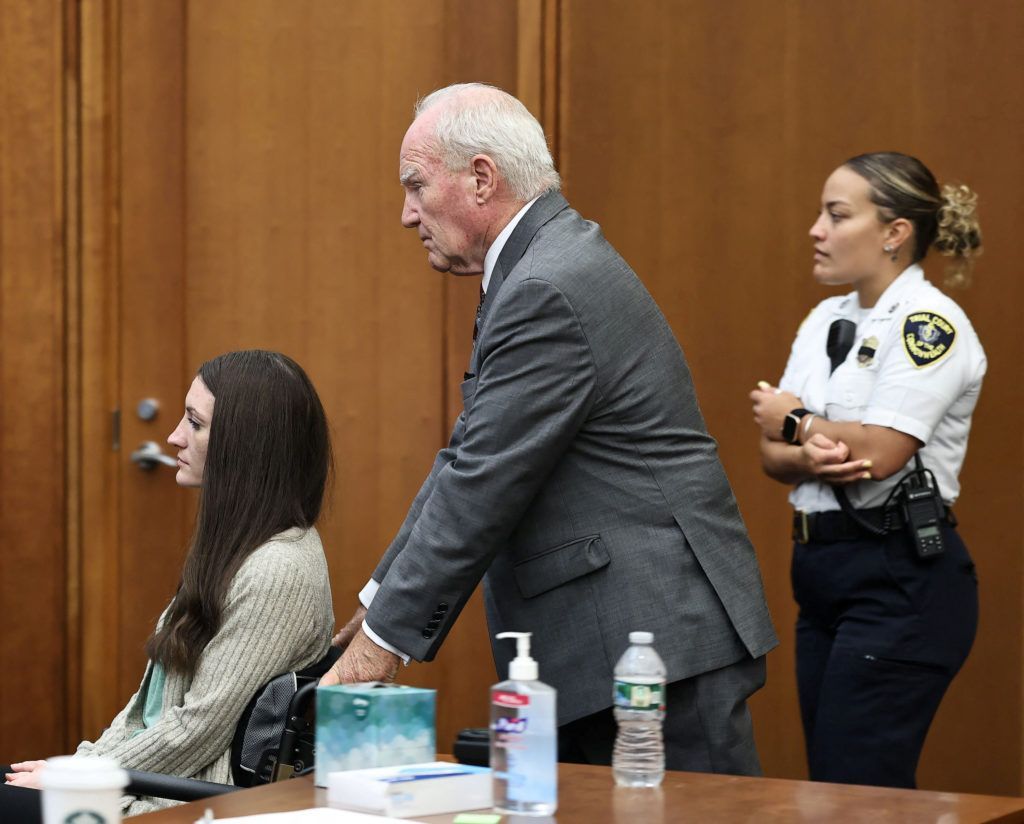
Two trials of Lindsay Clancy ran this year. Only one of them was real.
The real one — in a Plymouth County courtroom, over the deaths of her three young children — ended last week in a mistrial, with the jury reportedly eleven to one in favour of finding her not criminally responsible by reason of mental illness. The other trial ran on TikTok. And in that one, the defendant was her husband.
The trial the internet ran
Inside the courtroom, there was never a whodunit. Lindsay Clancy agreed to a stipulation of facts: she admitted, in writing and in advance, that she killed Cora, Dawson and Callan. More than 80 witnesses and 300 exhibits were directed at a single question — was she so unwell, in the grip of catastrophic postpartum mental illness, that the law should not hold her criminally responsible?
Outside, an army of amateur sleuths decided Patrick Clancy was the real killer. Apple Watch data. Body temperatures. Fingerprints. The timeline of his takeaway run. At least one invocation of "forensic astrology." The theories flourished despite Lindsay's own written admission, despite evidence placing Patrick outside the home, and despite the fact that nobody in the courtroom — not the prosecution, not the defence, not the accused herself — ever suggested he was involved.
Which raises the question I've been asked a dozen times this month: if there's even a chance the husband did it, why didn't her lawyer run that?
Because a lawyer runs the client's case. Not the internet's.
A defence lawyer is not a detective hunting the most compelling narrative. We are our client's representative, and the case we run is built on our client's instructions — what they admit, what they dispute, and the outcome they want.
In NSW, that's a professional obligation, not a courtesy. A solicitor must act on a client's lawful, proper and competent instructions. We advise — sometimes bluntly — on what defences the evidence actually supports. But the client decides the fundamental position of the defence. It's their liberty on the line.
And there's a hard limit the online sleuths never grapple with: a lawyer cannot advance a positive case they know to be false. If a client instructs, "I killed my children — I was not myself, but I did it," her lawyer cannot stand up and point at somebody else. Knowingly misleading the court sits among the gravest things a lawyer can do; our duty to the court outranks even our duty to the client.
So when commentators demanded Clancy's lawyer "go after the husband," they were demanding he ignore his client's instructions and invent a defence she had disavowed in writing. That's not advocacy. That's malpractice.
The case that was actually run: attack the mental element
Every serious offence has two components: the physical act (actus reus) and the guilty mind (mens rea). Murder is never just "causing a death" — in NSW it requires intent to kill, intent to inflict grievous bodily harm, or reckless indifference to human life.
By stipulating to the facts, Clancy's defence conceded the act entirely and bet the whole trial on the mind: that postpartum psychosis left her incapable of the culpable mental state the law demands before it calls someone a murderer. In Massachusetts that argument is "lack of criminal responsibility" — and success would have meant a secure psychiatric facility, not freedom. A detail almost entirely missing from the online coverage.
A NSW court would offer the same architecture, plus a middle path:
- Act proven but not criminally responsible under the Mental Health and Cognitive Impairment Forensic Provisions Act 2020 (NSW) — the accused did the act but, through mental health impairment, didn't know its nature or that it was wrong. Detention or supervision follows, not release.
- Substantial impairment under s 23A of the Crimes Act 1900 (NSW) — an abnormality of mind substantially impairing the accused's capacity reduces murder to manslaughter. Same instructions, same concession of the act, different verdict.
That's what a real defence looks like: not a whodunit, but a precise argument about which offence, if any, the proven facts and the accused's mental state actually make out.
What this means if you're facing charges
Your lawyer's job is to run your case, on your instructions, using defences the law and the evidence genuinely support — not the theory with the best engagement metrics. That's why honesty with your lawyer matters so much: everything you tell us is protected by legal professional privilege, and the strategy we build is designed for a courtroom, where the rules of evidence apply and being wrong has consequences.
Lindsay Clancy's jury came within one vote of accepting that a profoundly ill woman was not a murderer. That near-verdict was produced by a defence built on her instructions, her admissions, and the actual evidence. The internet's trial produced nothing but the harassment of a grieving father.
Only one of those trials counts.